

Last Updated: November 17, 2026
Quick Summary
Faith based self care is the practice of tending to your body, mind and spirit as gifts entrusted to you by God. For a mother who feels depleted, it starts with seeing rest and care as stewardship rather than indulgence. Small, doable steps can restore your energy over time.
- Caring for yourself allows you to care well for the people who depend on you.
- Body, mind and spirit are one connected system, so tend to all three together.
- Choose one Bible verse to carry through the week and place it where you will see it.
- Use a breath prayer with three slow breaths to interrupt a surge of frustration.
- On the busiest days, one practice done fully is more restorative than seven attempted.
Table of Contents
- What Faith Based Self Care Means for a Mother
- Self-Care Bible Verses to Anchor Your Days
- Motherhood Stressors That Drain Your Spirit and How to Respond
- Building a Faith-Based Self-Care Routine for Any Schedule
- A Christian Self-Care Checklist You Can Use This Week
- Self-Care Bible Study: A Guided Reflection for Mothers
- Your Next Step: Begin a Gentle Reset This Week
- Frequently Asked Questions
What Faith Based Self Care Means for a Mother
Faith based self care is the practice of tending to your body, mind and spirit as gifts entrusted to you by God. For a mother who feels depleted, it starts with a simple shift: rest and care become acts of stewardship rather than indulgences.
Many mothers recognize the feeling of running on empty long before they name it. Browsing faith-based planner options that fit real family schedules can be a helpful place to start.
Why rest and care are not selfishness
Many Christian mothers feel guilty when they step away from daily responsibilities to pray or rest. That guilt often comes from confusing self-neglect with stewardship.
A helpful question to ask is whether your care is sustainable. If you pour out constantly without refilling, you will eventually have nothing to give. Rest, in this light, protects your family as much as it protects you.
Caring for body, mind and spirit as one stewardship
Body, mind and spirit are not three separate projects. A night of poor sleep can make patience and clear thinking harder. Think of them as one connected system worth tending.
Start with one small anchor in each area. For the body, that might be a glass of water before coffee or a ten-minute walk. For the mind, try writing down the three most urgent tasks so they stop circling in your head.
Self-Care Bible Verses to Anchor Your Days
Scripture offers a steady foundation when your days feel chaotic. Choosing one verse to carry through the week gives you something concrete to return to when you feel overwhelmed.
Consider these passages as starting points:
- Matthew 11:28: "Come to me, all you who are weary and burdened, and I will give you rest."
- Psalm 23:2-3: "He makes me lie down in green pastures, he leads me beside quiet waters, he refreshes my soul."
- Isaiah 40:31: "But those who hope in the Lord will renew their strength."
Write your chosen verse on a sticky note and place it where you will see it during your busiest hour, such as the kitchen counter or the bathroom mirror.
Motherhood Stressors That Drain Your Spirit and How to Respond
Certain pressures show up again and again in motherhood: constant interruptions, the mental load of managing everyone's schedules, comparison on social media, and the sense that you should be doing more. If you feel like you are losing yourself in these demands, this guide on keeping your identity intact in motherhood offers practical direction.

When you feel a surge of frustration, your body enters a stress response: your heart rate rises, your breathing becomes shallow, and your thinking narrows.
It also helps to identify your personal triggers.
Finally, consider what you are modeling for your children. When they see you pause, pray, and respond calmly, they learn that emotions can be managed with God's help.
Building a Faith-Based Self-Care Routine for Any Schedule
A sustainable routine has to fit your real life. A plan that requires two hours of quiet time will collapse the first week you have a sick child. Instead, design a flexible rhythm with a daily minimum you can keep even on your worst days, and build from there.
Daily practices for busy days
Use these numbered practices as a menu, choosing two or three that feel doable:
- Begin with one verse. Read a single Scripture passage before checking your phone.
- Drink a glass of water before your first cup of coffee.
- Take three slow breaths before entering a stressful room or conversation.
- Step outside for five minutes of fresh air, even if it is just the doorstep.
- Write one sentence of gratitude in a notebook or on a notes app.
- Set one boundary, such as no screens during dinner or a fixed bedtime for yourself.
- End with a short prayer of thanks for one thing that went well.
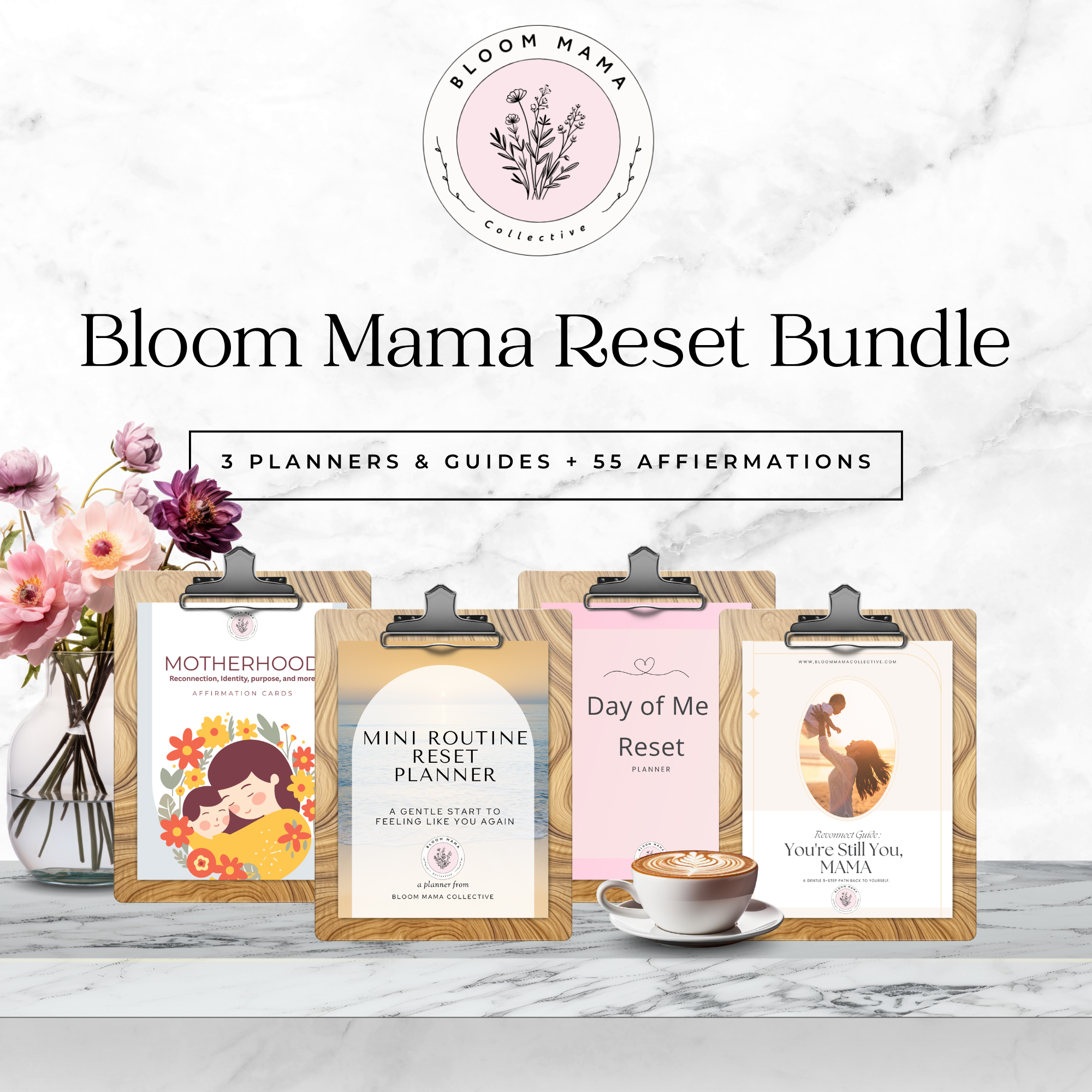
On the busiest days, the minimum is enough. Choosing one practice and doing it fully is more restorative than attempting all seven and feeling defeated. A printable self-care planner bundle gives you a space to write your routine down and start using it right away.
Adapting your routine to different schedules
Your routine should shift with your season of life. Here are three flexible templates:
- The full-time-at-home mother with young children: Anchor your day around nap time or early morning. Use the first ten minutes after waking for a verse and prayer before the children are up. During nap time, choose one restorative activity, a short walk, a devotional, or simply sitting with a cup of tea. Protect one evening a week for a longer Sabbath-style rest, asking a partner or family member to handle bedtime.
- The working mother with a commute: Use your commute as sacred time. Listen to an audio Bible or worship music instead of news or social media. Keep a verse card in your car or on your phone lock screen. At lunch, take five minutes to step outside and breathe. On weekends, protect a two-hour block for rest and family connection, and guard it from errands.
- The mother in a demanding season (new baby, illness, or crisis): Lower the bar to the absolute minimum. One verse, one glass of water, one breath prayer. Ask for help specifically, not "I need a break" but "Can you take the children for an hour on Saturday morning?" Accept that this is a season, and give yourself grace.
Evaluating whether your routine is helping
A routine is only useful if it actually restores you. Once a week, take five minutes to reflect on these questions:
- Did I feel more patient or more depleted this week?
- Which practice felt life-giving, and which felt like another task?
- What got in the way, and what could I adjust?
Keep a simple note in your journal or phone. Over time, you will see patterns that help you refine your routine. If a practice consistently feels like a burden, drop it.
Watch out: if you find that even your best efforts leave you feeling persistently exhausted, anxious, or hopeless, that is a sign to seek professional help. Self-care is not a substitute for medical or mental-health support.
A Christian Self-Care Checklist You Can Use This Week
Use this checklist to make faith-based self care practical. Check off what you can manage and return to it each week.
- I have chosen one Bible verse to carry through the week.
- I have drunk water before my first coffee on most days.
- I have taken at least one five-minute break outside or away from screens.
Keep the checklist somewhere visible. Progress in small steps builds confidence and makes self care feel less like another task.
Self-Care Bible Study: A Guided Reflection for Mothers
This short reflection can be done in fifteen minutes with a journal and a Bible. Read slowly, pausing after each question.
Read: Matthew 11:28-30.
Reflect:
- Where in my life do I feel weary or burdened right now?
- What would it look like to accept Jesus's invitation to rest in this area?
- Which part of my body, mind or spirit needs the most attention this week?
- What is one boundary I could set to protect that need?
Pray: Ask God to show you one small act of rest you can offer yourself tomorrow. Write down whatever comes to mind, without judging it.
Return to this reflection once a week. Over time, your answers will reveal patterns that help you plan your routine more wisely.
Your Next Step: Begin a Gentle Reset This Week
You do not need to overhaul your life to begin caring for yourself. Choose one verse, one daily practice and one protected hour, and start there. If you want a slow start, a gentle first-week guide to daily planning walks you through the basics one day at a time.
Here is a quick summary of the three concrete starting steps the guide recommends.
| Step | What to do | Time or frequency |
|---|---|---|
| Choose one verse | Pick a single Scripture to carry through the week | Read before checking your phone |
| Choose one practice | Select a daily practice you can keep on busy days | Daily minimum |
| Protect one hour | Set aside a block for rest or a Sabbath-style pause | Once this week |
Frequently Asked Questions
Is self-care biblical for Christian women?
Yes, many Christians see self-care as faithful stewardship of the body, mind and spirit that God has entrusted to each person. Scripture repeatedly shows rest, prayer and renewal as part of a healthy life, and Jesus himself withdrew to quiet places to pray. Faith based self care does not replace trust in God. It is a practical way to keep showing up for your family, your calling and your relationship with God without running on empty.
How can I practice self-care as a Christian mother?
Start small and tie each practice to a moment you already have. You might pray for five minutes while the coffee brews, read one Psalm during nap time, or take a short walk after dinner. Faith based self care works best when it fits real seasons of motherhood. Choose one physical, one spiritual and one emotional practice, and let the rest wait until the first habit feels steady.
What does the Bible say about taking care of yourself physically?
Many Christians read Scripture as calling them to honor God with their bodies, which can be a reason to care for sleep, food and movement. Genesis also shows God resting on the seventh day, and Mark 6 records Jesus telling His disciples to come away and rest. A Christian self-care checklist can include these basics without turning them into a source of guilt.
How do I make time for self-care when I have young children?
Look for small pockets rather than large blocks. Five minutes of Scripture before the house wakes, a three-minute breathing pause before a difficult conversation, or asking a partner to cover one bath time a week can all count. A faith-based self-care routine should flex with your schedule. On the hardest days, the goal is simply to return to God and take one honest breath.
What is the difference between self-care and selfishness?
Selfishness puts your needs above others and refuses to consider anyone else. Self-care recognizes that you are a person God loves and asks you to steward your strength so you can serve well. Faith based self care sets healthy boundaries, such as saying no to commitments that drain you, while still giving generously to your family. Rest that restores your capacity to love is not a failure of love.
Which Bible verses can encourage self-care?
Many mothers return to Matthew 11:28-30, where Jesus invites the weary to come to Him for rest. Psalm 23 offers the image of still waters and green pastures, and Isaiah 40:29-31 promises strength to those who wait on the Lord. Reading a self-care Bible verse slowly, then writing one sentence about how it applies to your week, turns Scripture into a daily refuge rather than another item on the list.
What are some examples of spiritual self-care?
Spiritual self-care includes intentional prayer, unhurried Bible reading, journaling your honest thoughts before God, worship music, and time in a church community or small group. It can also mean confessing what weighs on you and receiving grace. A self-care Bible study done for ten minutes a day can deepen this practice without demanding hours you do not have.
When are spiritual practices not enough, and when should I seek professional help?
Prayer and Scripture are powerful, but persistent hopelessness, panic, thoughts of harming yourself or a sense of being unable to function are signs to reach out to a doctor, counselor or pastor as well. Faith and professional care often work together. Seeking help is a faithful response to the body and mind God has given you, not a lack of trust in Him.


